



 Share Profile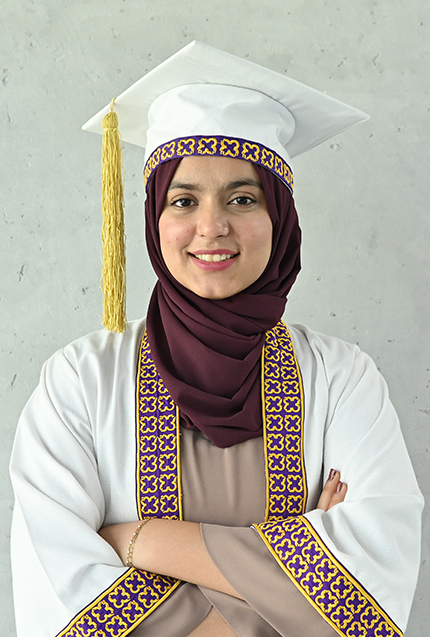
ANOSHA M. NANGRAJ
Aspiration Statement
"I am passionate about public health and intersection with social inequities. With experience in 3 research projects, I aim to pursue MPH to deepen understanding and impact in public health."
Core Skills
- Community Engagement, Field Research and Data Collection, Quantitative Research, Scientific Writing and Reporting
Academic Awards / Achievements
- Full Scholarship Recipient, Michigan State University VIPP Global Summer School (2022)
Experience
Leadership / Meta-curricular
- Full Scholarship Recipient, Michigan State University VIPP Global Summer School (2022), Principal Investigator, Project JARR, Research Presenter, ASM Microbe Conference, United States, Delegate, Youth Peace Forum, Antalya, Turkey (2023)
Internship / Volunteer Work
- Summer Researcher, Habib University (2024), Summer Researcher, Habib University (2023), Facilitator, Green Crescent Trust (2022-2023)
Publications / Creative Projects
- Published research titled "Exploring Water Resource Economics: A Study on Groundwater Efficiency and Yield Optimization in Cotton Farming across Sindh, Pakistan." The study analyzed sustainable groundwater use and economic efficiency in agriculture, contributing to the global discourse on climate-resilient farming practices
Final Year Project
Project Title
Threads Of Sindhi Heritage: Women Artisans And Social Capital In Srso's Crafts Program
Description
This study investigates how women artisans in rural Sindh, Pakistan���where female labor force participation is only 21%���achieve empowerment and financial independence through traditional handicrafts. Focusing on those associated with Sindh Rural Support Organization (SRSO), the research explores their economic and social growth over a decade. Using qualitative methods such as semi-structured interviews and focus groups with five artisan groups, the study highlights the critical role of social capital, leadership, and trust-based networks in fostering resilience, mobility, and legitimacy within patriarchal settings. Theoretical frameworks by Coleman, Bourdieu, and Ben-Porath guide the analysis, emphasizing how interpersonal ties and support from organizations like SRSO and JICA contribute to collective development. The findings demonstrate that women's craft-based livelihoods not only generate income but also help preserve Sindh's cultural heritage. This research offers valuable insights into how empowering marginalized women through social networks can drive sustainable community development.